Still in Peak Hurricane Season for New England

After a couple days of drenching rain, it is always nice to kick back and enjoy the clear blue skies.  But this is also a perfect time to check all your emergency gear!

Get those generators humming, batteries charging, and drag out those unused HTs to make sure they still work (or more likely that their owner remembers how to use them).

Now that it is fall, we might think things are calming down weather-wise, but that isn’t the case in New England.  Our peak hurricane season runs from mid-August thru mid-October.  And it isn’t unusual to get storms all the way to the end of hurricane season at the end of November.  Anyone remember Hurricane Sandy (October 29th)?

An interesting situation is brewing in the Caribbean, which might have impacts on the East Coast next week, as seen below.  Hurricane Humberto (lower right) is expected to track a bit further to the NW then swing to the NE, and out to the ocean.
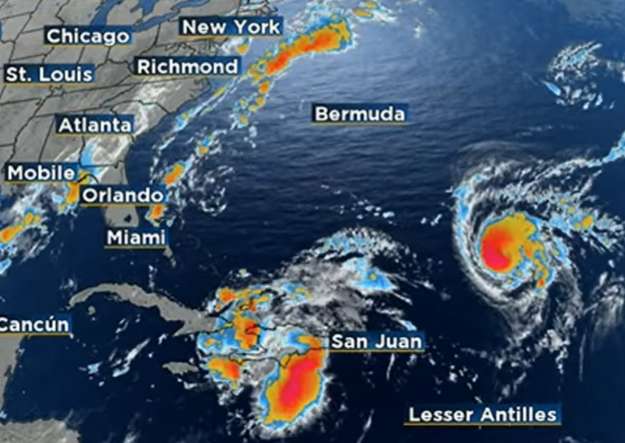
The area in the lower center is Area of Interest 94L, which has high odds of developing into a tropical storm and hurricane (Imelda) in the next few days.  There is a low pressure system developing over the southeastern states, coupling with the influence of Hurricane Humberto, that makes the path of what may become Imelda somewhat uncertain.  Yet another weather system, a large Canadian high may well protect New England and cause the storms to pass off shore.

Nevertheless, given all the forecast uncertainty, keep a weather eye out and be prepared.
We Are In Hurricane Season!

The first tropical storm of the 2025 season, Andrea, has formed.  While this storm doesn’t appear likely to impact the US at this time, it is a reminder that we ARE in Hurricane Season.

The last hurricane to make landfall in New England was 34 years ago – Hurricane Bob.  Averages indicate that our area has a hurricane landfall every 11.5 years, so we are very much overdue for one.  For New England, our season typically runs from mid-August thru September, but you never know.

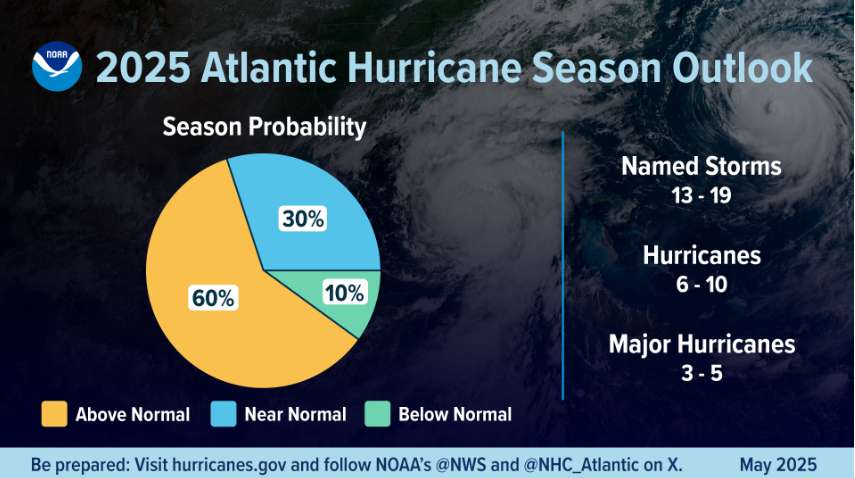
NOAA is predicting a busier that usual season this year. Part of their reasoning has to do with much higher than normal sea temperatures off the Atlantic Coast.  Southern New England is usually protected by a very cold band of water to our South that tends to rapidly weaken hurricanes into tropical storms.  This year, that area of the sea is running warmer than normal as well.

There is a decent discussion of the 2025 season on the Accuweather website. A more technical discussion of tropical weather can be found at Tropical Tidbits.

No matter what, the time to get your preparations done is now, while the weather isn’t blowing a stink.

Colorado State Increases Atlantic Hurricane Forecast After Beryl

Hurricane Beryl (now making its way through middle America) set multiple records for an early-season hurricane, including the most rapid intensification ever seen, as well as the first Category 5 hurricane on record for this time of year.

The NOAA forecast for the 2024 Hurricane Season called for significantly more storms, and more intense storms than average.  Experience from Beryl has many groups wondering if their forecasts need to be revised.  Colorado State just did exactly that, bumping their forecast numbers up.

The reason for pointing this out is that we, in New England, are at a higher risk than usual, with warmer waters off our coast (usually our cold waters cause storms to die out).  Now is the time to make our preparation for the upcoming storm season.  Review your evacuation plans, tune-up your generators, and have your go-kits ready to go.

Are you prepared? Hurricane Season is underway!

NOAA has announced a much greater than normal Atlantic Hurricane Season Outlook with 17 to 25 named storms and 4-7 major ones.

With this in mind, are you ready for this year’s hurricane season?  Do you have a plan for protecting your home and family?  See this resource for planning help.

Are you currious about the data that backs up the forecast?  There is an excellent 15 minute long discussion about how the transition from El Nino to La Nina, water temperatures in the Pacific and Atlantic, and upper level winds all factor into the probability of hurricanes.
